Skip to content

rodent control Orlando

Rodent Control in Orlando and Central Florida

Roof rats follow food, water, and gaps as small as a quarter, often along oak limbs that still touch soffits. Orlando Pest Experts starts with a route inspection so the plan covers how rodents get in, where they travel overnight, and which gaps need sealing after trapping.

Inspect before cooler fall nights push roof rats deeper into attics, and again after storms that shift screens, shingles, or limbs against the roofline. Longwood and Apopka canopy lots see overhead travel year-round under protected oak cover.

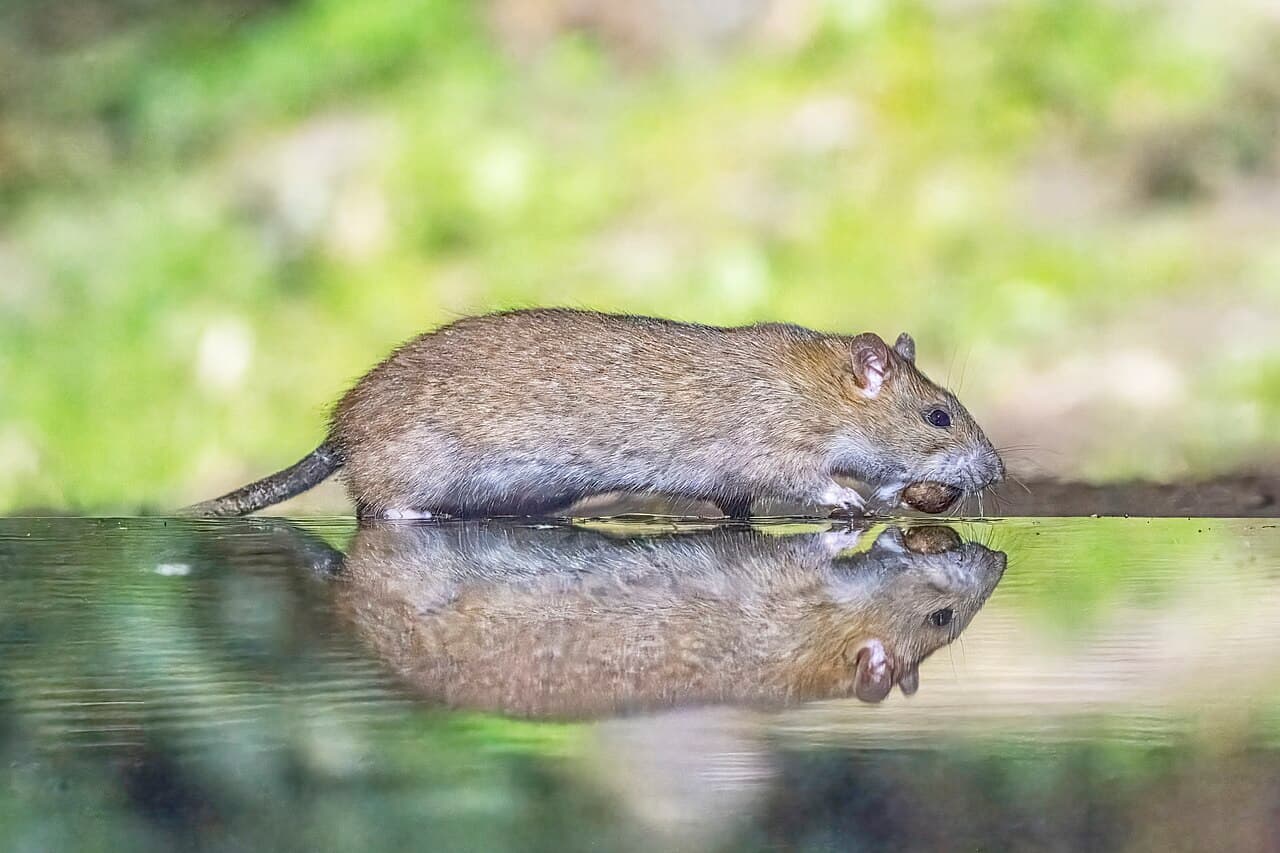
Roof rat (Rattus rattus), the primary rat species around Central Florida homes

Prevention-first rodent control for Greater Orlando

Every visit starts with the conditions on your property. We look for source pressure, entry routes, and repeat triggers so the plan fits Central Florida homes and businesses - from irrigated subdivisions to canopy lots and lake-adjacent yards.

Entry-point and attic access inspection
Trapping or baiting matched to conditions
Sanitation and food-source recommendations
Monitoring and exclusion follow-through

How our service works

We walk you through what we check, why it matters, and what happens next.

1

Find routes and pressure

We inspect soffit gaps, garage weatherstripping, tree-to-roof contact, shed door sweeps, droppings, and rub marks. On canopy lots we also walk fence lines and power-line paths rats use before they reach the attic.

2

Set a controlled plan

Depending on what we find, we recommend trapping, baiting, exclusion, sanitation, or a mix that fits the property. Pet food, bird seed, and open shed storage often sit on the same list as hardware sealing.

3

Close the loop

Follow-up checks traps and confirms the same soffit gap, limb contact, or shed route is closed.

Common rodent species in Central Florida

Roof rats lead most attic and canopy calls in Greater Orlando. House mice are the usual small indoor rodent. Norway rats show up less often but still matter when burrows or ground-level harborage are present.

Roof rat (Rattus rattus), also called black rat, with a long tail

Roof rat (Rattus rattus)

Roof rats are the primary rat species around Central Florida homes. They climb well, travel along tree limbs and power lines, and nest in attics, soffits, and dense vegetation. Mature oak canopy lots see steady overhead pressure year-round, with more indoor movement when cooler nights or storms shift shelter.

Where found
Attics, soffits, palm crowns, citrus and oak canopies, sheds, and vine-covered fences. Droppings and rub marks often show along rafters and garage ceilings.
How to recognize
Sleek body, pointed nose, large ears, and a tail longer than the head and body. Color ranges from black to brownish gray with a lighter belly. Prefer elevated nesting sites.

UF/IFAS rodent management guidance; photo via Wikimedia Commons (Alex O'Neal, CC BY-SA 2.0).
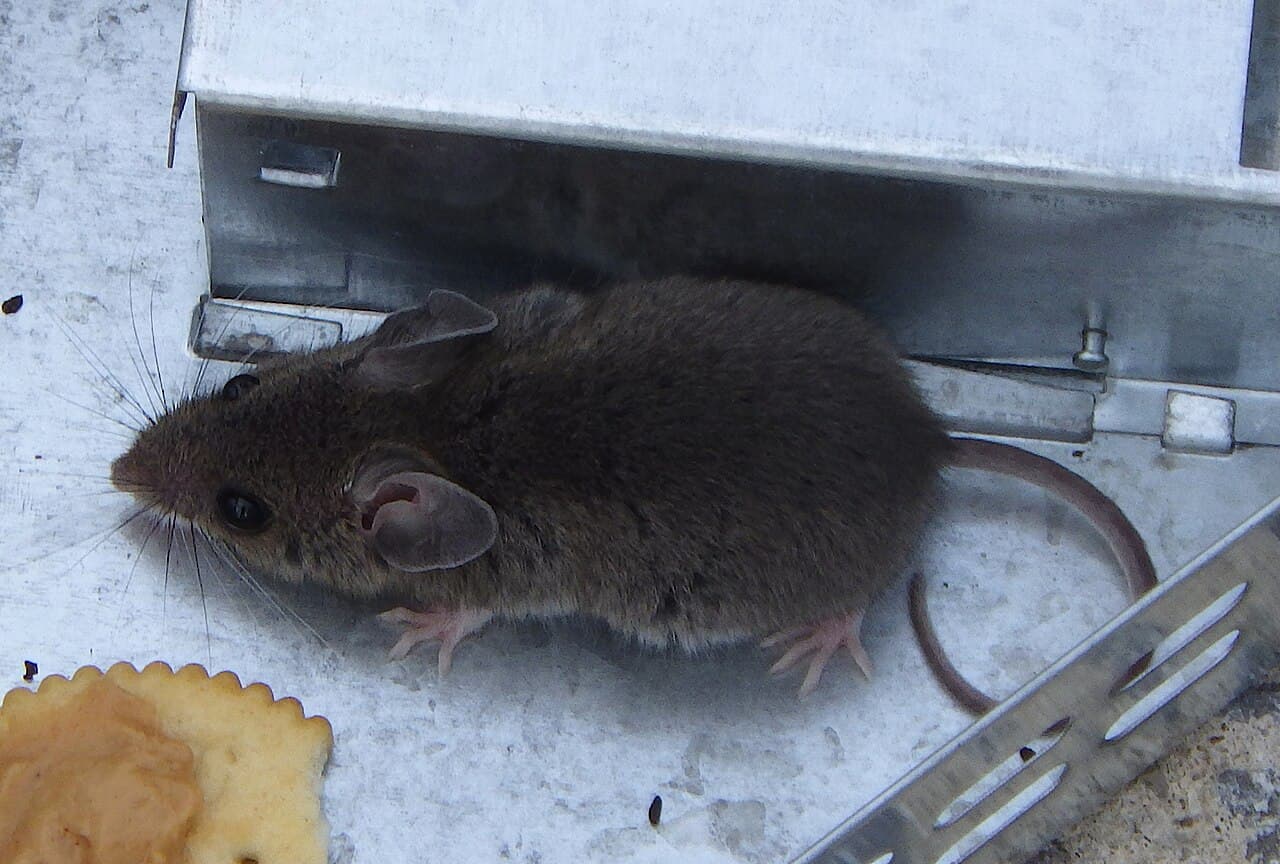
House mouse (Mus musculus) in a natural setting

House mouse (Mus musculus)

House mice are small, adaptable rodents that nest indoors near food storage, appliances, and clutter. In Central Florida they move through wall voids and cabinets year-round when crumbs and pet food are available. A few mice can leave droppings across multiple rooms before anyone sees an animal.

Where found
Kitchens, pantries, garages, storage rooms, and wall voids. Nesting materials include paper, insulation, and fabric scraps.
How to recognize
Small body about 2.5 to 3.5 inches plus a similar-length tail. Large ears relative to the head, pointed nose, and droppings about the size of a grain of rice.

UF/IFAS rodent guidance; photo via Wikimedia Commons (Ahunt, CC0).

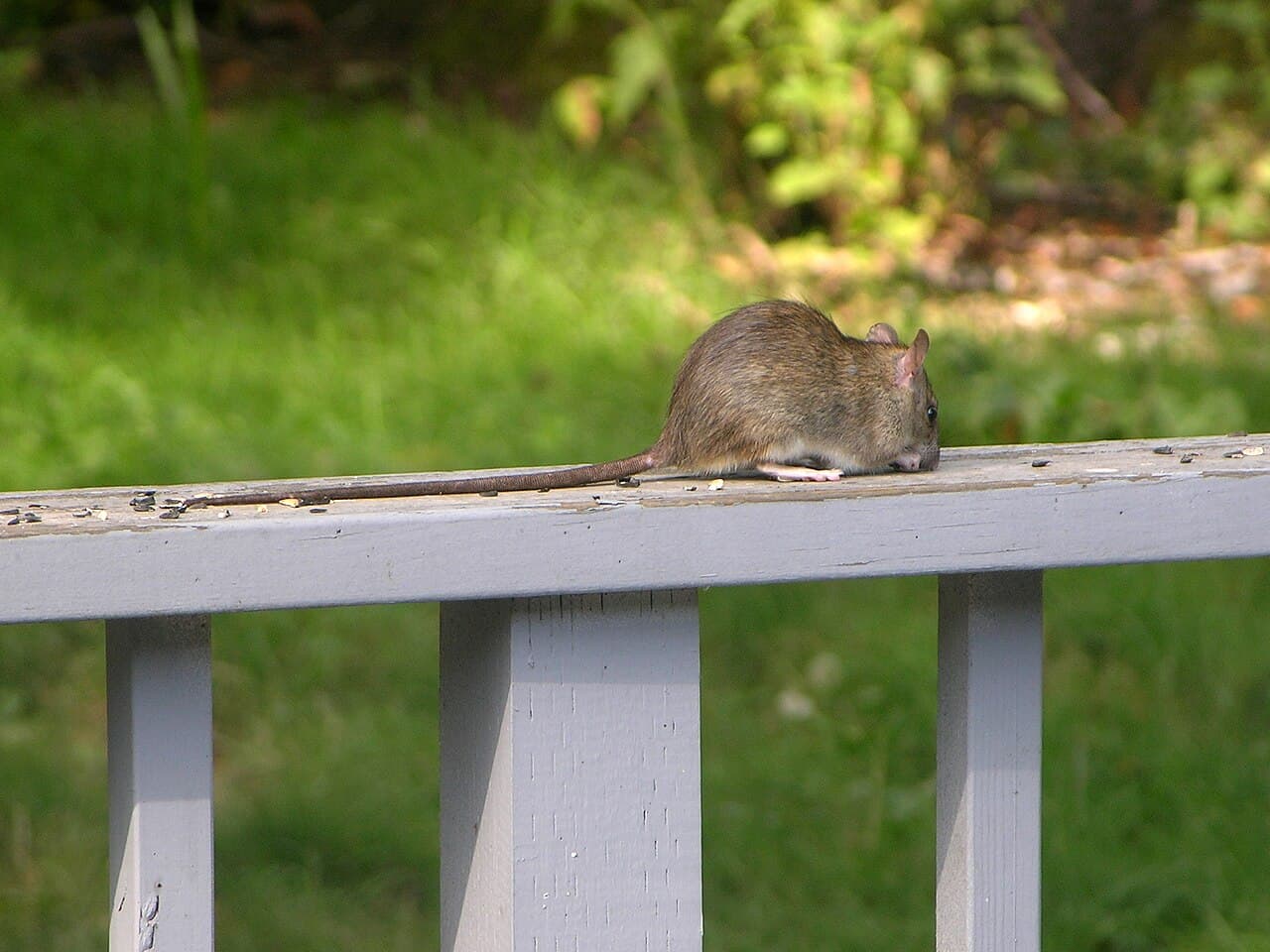
Norway rat (Rattus norvegicus), also called brown rat

Norway rat (Rattus norvegicus)

Norway rats (brown rats) occur in Florida but are less common around many Central Florida homes than roof rats. When present they prefer ground-level harborage such as burrows along foundations, dense ground cover, dumpster pads, and cluttered storage. Confirming species helps set trap and exclusion placement.

Where found
Burrows along foundations, under slabs or debris, sewer-adjacent areas, and ground-level storage. Less likely than roof rats to nest high in attics.
How to recognize
Heavier body than a roof rat, blunt nose, smaller ears relative to the head, and a tail shorter than the head and body. Fur is usually brownish gray.

UF/IFAS rodent guidance; photo via Wikimedia Commons (Charles J. Sharp, CC BY-SA 4.0).

Service areas

Roof rats and mice show up across Greater Orlando. Pressure runs highest where mature oaks touch roofs in College Park, Longwood canopy streets, and larger Apopka lots with sheds near the house. That includes Orlando, Longwood, and Apopka.

All Service Areas

Related services

Explore other prevention-first pest control services.

Common questions

Fast answers before you schedule.

Do you handle roof rats in Orlando?

Yes. Roof rats lead most attic calls in Central Florida, especially where oak limbs, power lines, and soffit gaps create overhead access in College Park, Longwood, and Apopka canopy neighborhoods.

Is rodent control only trapping?

Trapping reduces active animals. Lasting control also needs entry-point sealing and food-source cleanup so the next rat cannot reuse the same route.

Can you service commercial properties?

Yes. We work homes and businesses and tailor monitoring to dumpster pads, loading docks, and storage rooms where scraps and shade stay available overnight.

Why do rodents return after a few quiet weeks?

A new animal can use the same open gap. We recheck whether limb clearance, soffit seals, and food sources were finished before we change the plan.

Pests at home or at work?

Call or schedule a free estimate. Tell us what you are seeing and we will recommend the next step.