Skip to content

cockroach control Orlando

Cockroach Control in Orlando

Roaches follow moisture, crumbs, and tight harborage in kitchens, baths, and pool cages. Orlando Pest Experts identifies the species on site, treats the active cracks and appliances, and leaves a short moisture and sanitation list for the rooms that keep pressure alive.

German roaches stay an indoor kitchen problem whenever food and water sit overnight. Warm, humid months and lake-adjacent humidity raise American and smokybrown pressure outdoors, especially after rain around Doctor Phillips docks and Winter Park leaf litter.

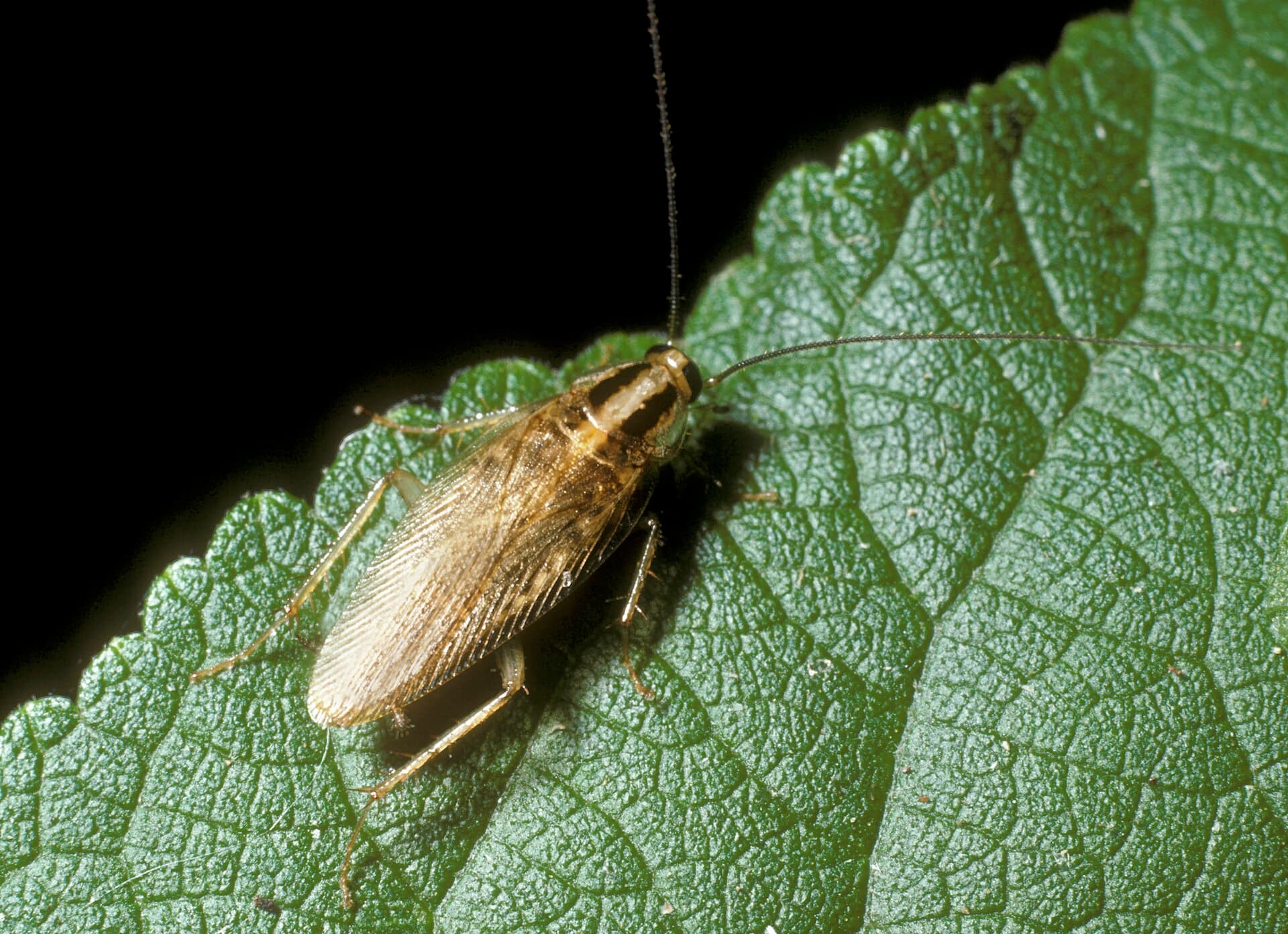
German cockroach (Blattella germanica), the primary indoor kitchen species in Central Florida

Prevention-first cockroach control for Greater Orlando

Every visit starts with the conditions on your property. We look for source pressure, entry routes, and repeat triggers so the plan fits Central Florida homes and businesses - from irrigated subdivisions to canopy lots and lake-adjacent yards.

German and American roach identification
Crack-and-crevice applications where they hide
Moisture and sanitation guidance
Follow-up options for heavier pressure

How our service works

We walk you through what we check, why it matters, and what happens next.

1

Identify the species

German roaches live in kitchens and baths. American and smokybrown roaches often stage in leaf litter, docks, and pool cages before they move indoors. We confirm what you are seeing before we choose products and placement.

2

Treat harborage zones

We treat cracks, cabinet voids, appliance gaps, wall voids, and other active harborage. On lake lots we also check cage screens, spa pads, and damp mulch bands that feed outdoor pressure.

3

Reduce attractants

You get concrete steps on sink leaks, overnight dishes, trash timing, and mulch depth. Those habits decide whether the first treatment holds or needs a faster follow-up.

Common cockroach species in Central Florida

German cockroaches are the primary indoor kitchen species in Central Florida. Larger American and smokybrown cockroaches, plus Asian and Florida woods cockroaches, usually start outdoors and wander in. Matching the species to the harborage changes how we treat.

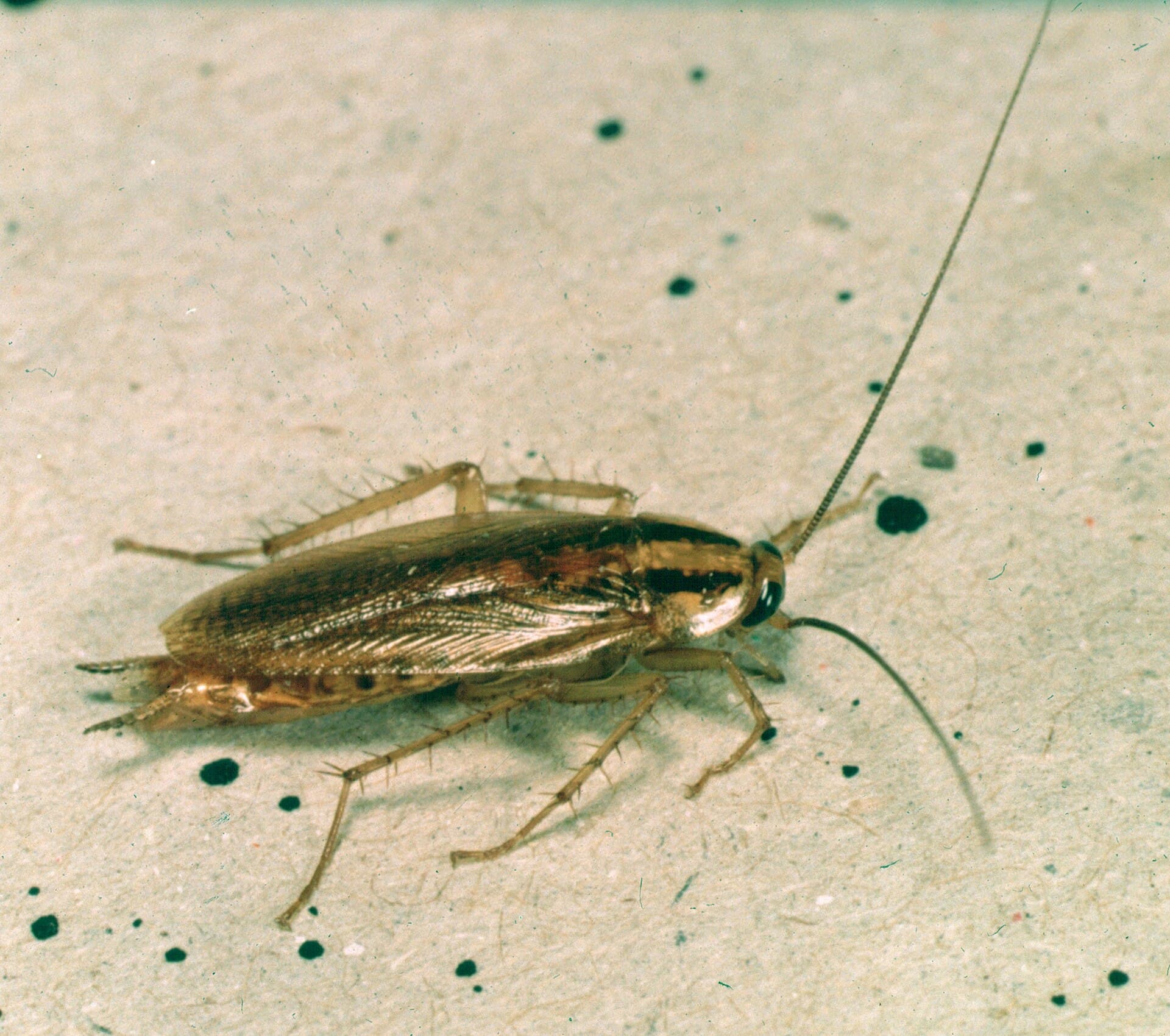
German cockroach (Blattella germanica) adult, light brown with two dark stripes on the pronotum

German cockroach (Blattella germanica)

German cockroaches are the main indoor kitchen and bathroom species in Central Florida homes and multifamily buildings. They stay close to food, water, and warm appliances, and populations can build quickly once a few hitchhikers settle in cabinets or wall voids. UF/IFAS treats this species as the structural cockroach of greatest concern statewide.

Where found
Kitchens, bathrooms, break rooms, and other warm indoor spaces with crumbs, grease, or moisture. Common under sinks, behind dishwashers and refrigerators, inside cabinet hinges, and along appliance kickplates.
How to recognize
Adults are about 1/2 to 5/8 inch long, light brown to tan, with two dark parallel stripes on the pronotum (the shield behind the head). They rarely fly. Egg cases are carried by the female until near hatch.

UF/IFAS EENY-002 and ENY-214; photo via Wikimedia Commons (Clemson University / USDA Cooperative Extension Slide Series, CC BY 3.0 US).
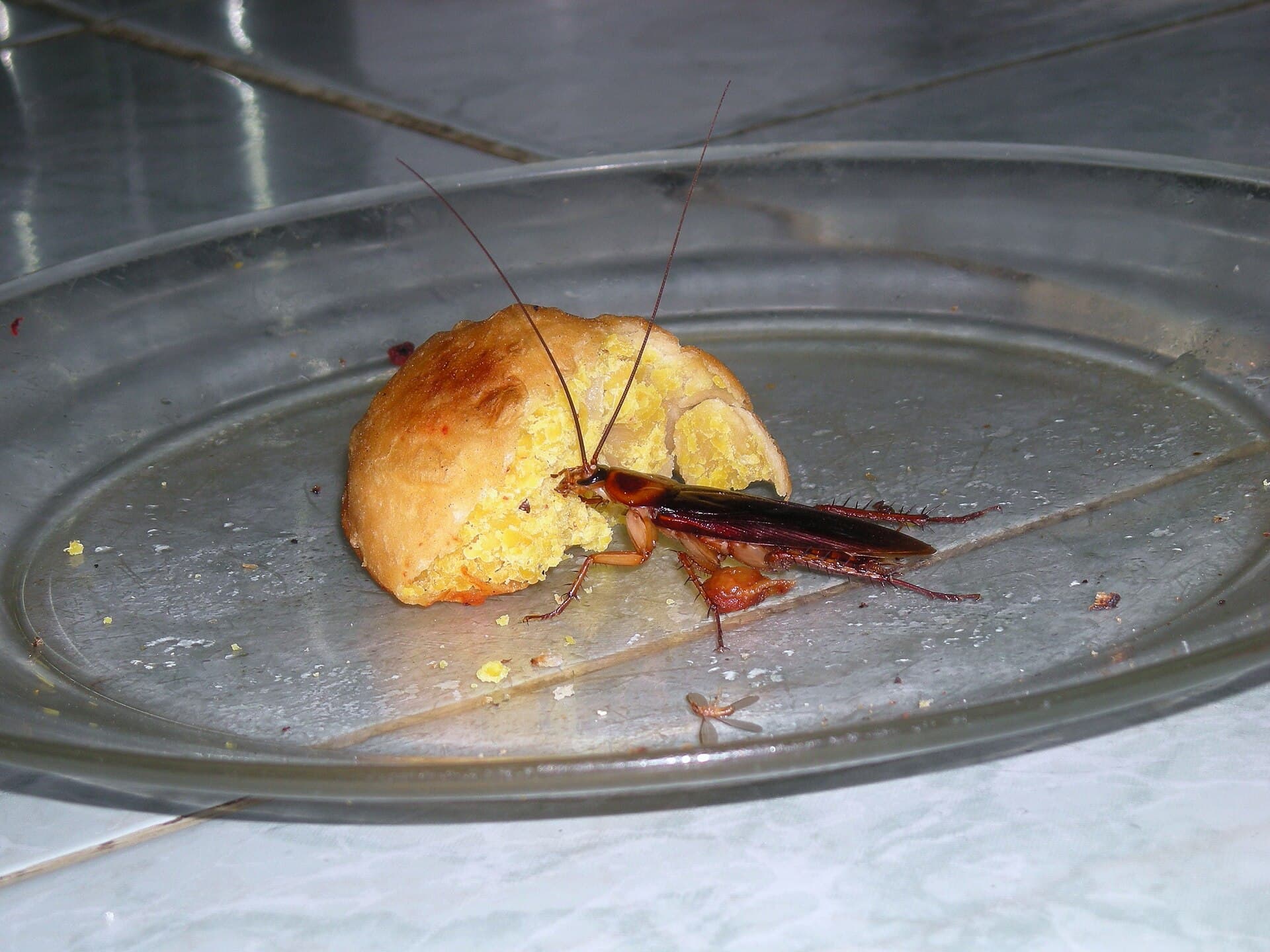
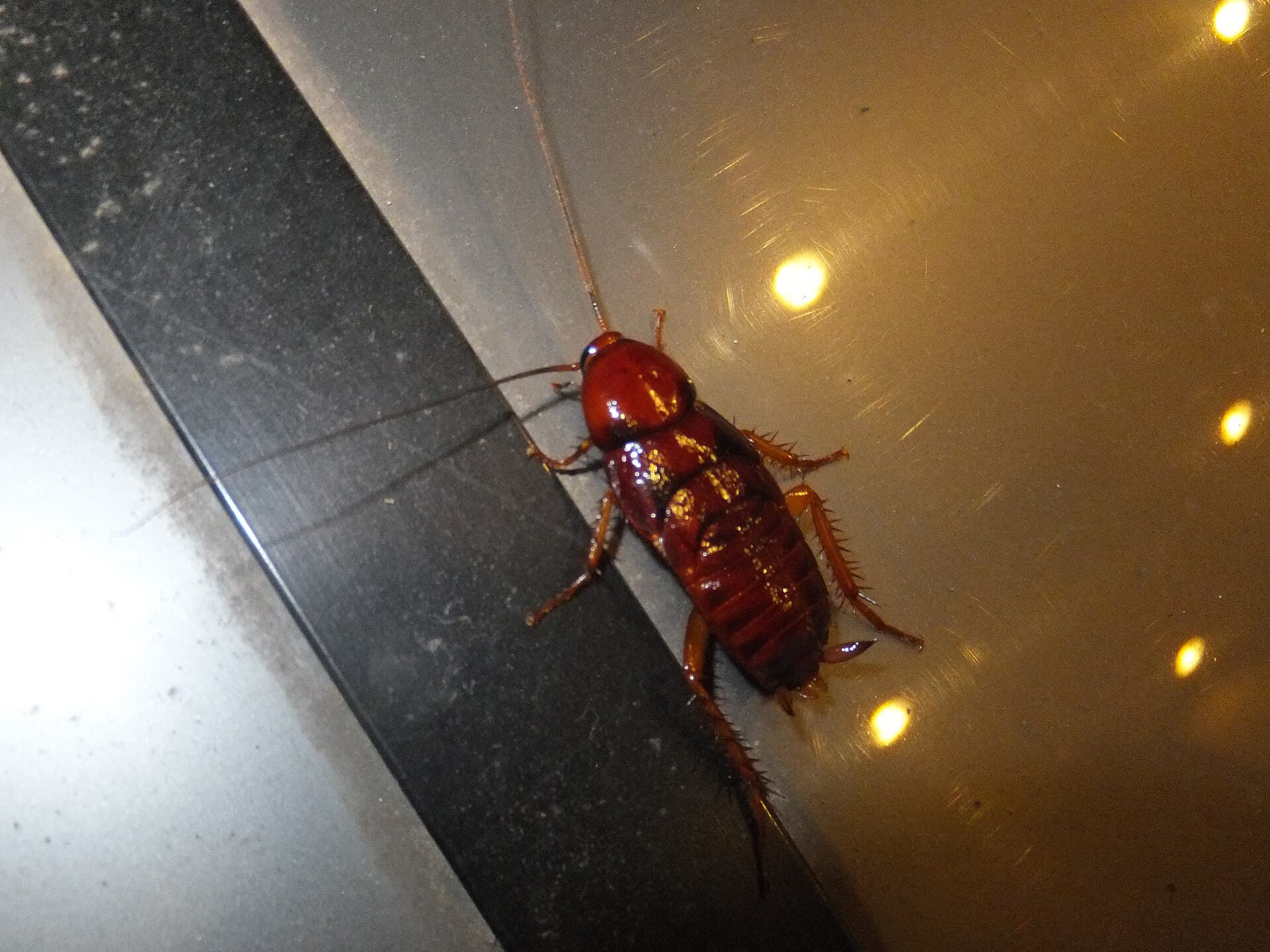
American cockroach (Periplaneta americana), large reddish-brown adult

American cockroach (Periplaneta americana)

American cockroaches are large outdoor and perimeter cockroaches often called palmetto bugs in Florida. They breed in damp, warm places such as sewers, mulch, tree holes, and garages, then wander indoors after rain or through plumbing and foundation gaps. Most lasting kitchen colonies here are German cockroaches. American cockroaches more often wander in from damp outdoor harborage.

Where found
Mulch beds, storm drains, crawl spaces, garages, utility rooms, and damp basements or laundry areas. After storms they may appear in bathrooms or kitchens overnight.
How to recognize
Adults reach about 1.5 to 2 inches, reddish brown, with a pale yellow band outlining the pronotum. Wings cover the abdomen; they can glide or fly short distances when warm.

UF/IFAS ENY-214; photo via Wikimedia Commons (Muhammad Mahdi Karim, CC BY-SA 3.0).

Smokybrown cockroach (Periplaneta fuliginosa), dark uniform adult

Smokybrown cockroach (Periplaneta fuliginosa)

Smokybrown cockroaches are common outdoor invaders in humid Central Florida yards. They prefer tree canopies, attic vents, gutters, and shaded exterior walls, and they move indoors when weather or lights draw them toward openings. Like other large outdoor species, they are often temporary visitors once inside.

Where found
Tree bark, leaf litter, roof eaves, attic vents, water-meter boxes, and porch lights. Homes with oak canopy and dense landscaping see them often in warm months.
How to recognize
Uniform dark mahogany to nearly black adults about 1.25 to 1.5 inches long. The pronotum lacks the yellow outline typical of American cockroaches. Strong fliers.

UF/IFAS ENY-214; photo via Wikimedia Commons (Syrio, CC BY-SA 4.0).

Asian cockroach (Blattella asahinai) adult, similar in size to the German cockroach

Asian cockroach (Blattella asahinai)

Asian cockroaches look almost identical to German cockroaches but live outdoors in leaf litter and lawn thatch across Central and South Florida. They fly readily and are drawn to porch and window lights at night. Outdoors they stay active around lights. Indoors they rarely build lasting kitchen colonies, so ID still matters for the treatment plan.

Where found
Shaded lawns, leaf litter, mulch, and ground cover. Adults fly to lights and may enter through open doors, windows, or damaged screens.
How to recognize
Same size and two-stripe pronotum pattern as German cockroaches, but adults fly well and are active outdoors. Finding many on the porch at dusk usually means Asian cockroaches are breeding in the yard.

UF/IFAS ENY-214; USDA ARS photo via Wikimedia Commons (public domain).

Florida woods cockroach (Eurycotis floridana) adult on wood

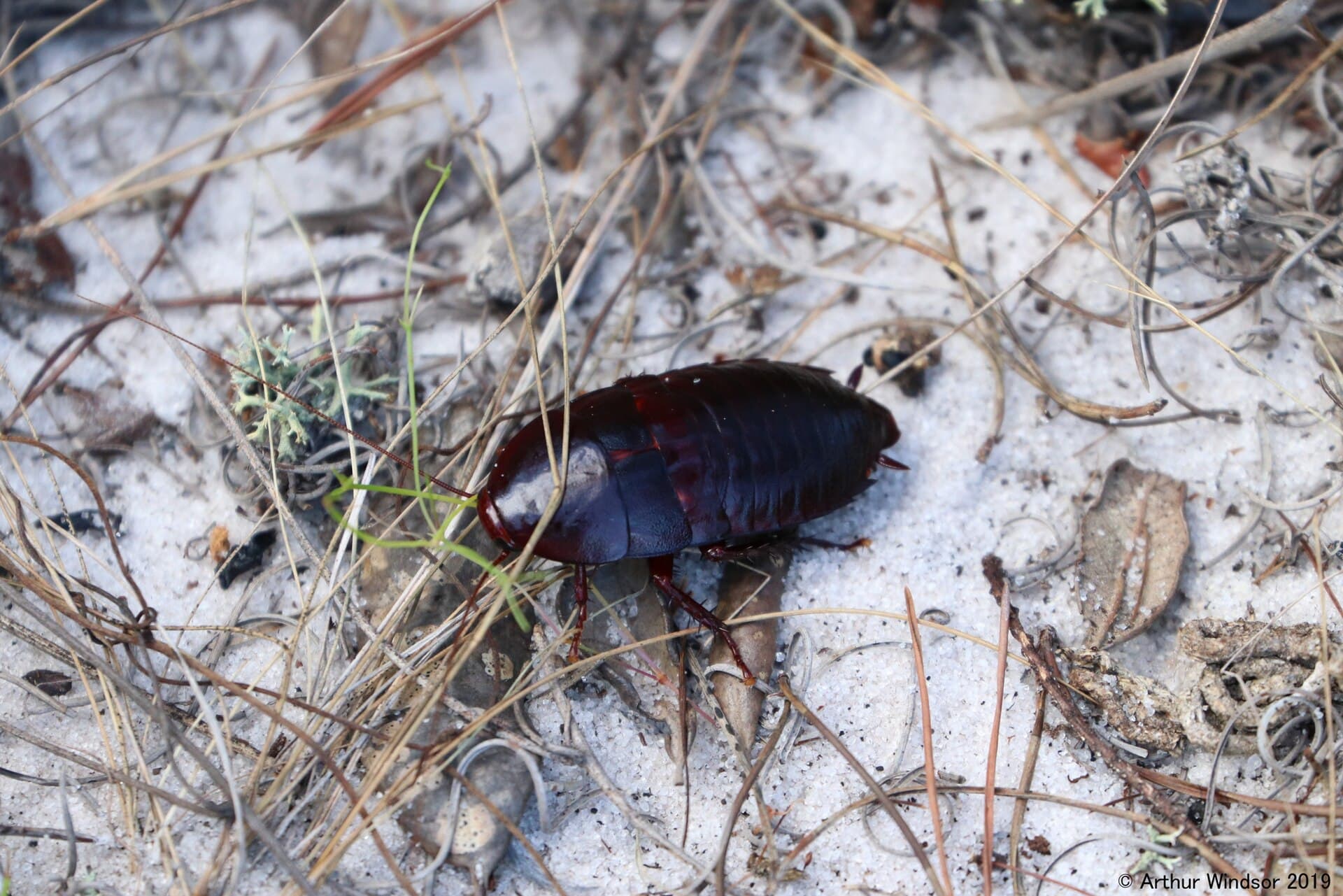
Florida woods cockroach (Eurycotis floridana)

Florida woods cockroaches are native outdoor cockroaches sometimes called stink roaches. They live under bark, in wood piles, and in leaf litter, and they may wander onto porches or into garages. They are large and slow, and they release a strong odor when disturbed.

Where found
Wood piles, rotting logs, under bark, dense shrubs, and shaded mulch. Occasional porch or garage sightings after rain.
How to recognize
Large, dark brown to black adults up to about 1.5 inches, with short wings that do not cover the abdomen. They do not fly. A sharp odor is common when handled.

UF/IFAS ENY-214; photo via Wikimedia Commons (Arthur Windsor, CC BY 4.0).

Service areas

We handle German, American, and occasional invader roaches across Greater Orlando. Calls cluster in downtown multi-unit chases, lake-humidity corridors in Doctor Phillips, and canopy streets near Winter Park Village. That includes Orlando, Doctor Phillips, and Winter Park.

All Service Areas

Related services

Explore other prevention-first pest control services.

Common questions

Fast answers before you schedule.

Are German roaches common in Orlando?

Yes. German roaches lead indoor kitchen calls, especially in multi-unit buildings with shared trash chutes and utility stacks. They need focused crack-and-crevice work plus sanitation and moisture control.

Will one visit solve every roach issue?

Light activity can improve after one visit. Heavier German infestations and lake-edge American pressure often need follow-up plus harborage and moisture work between visits.

Do you treat restaurants and offices?

Yes. Commercial plans focus on kitchens, break rooms, dumpster pads, and shared chases where grease and overnight moisture keep colonies active.

What is the difference between German and American roaches?

German roaches usually live indoors near kitchens and baths. American and smokybrown roaches often move in from damp leaf litter, docks, or pool cages after rain.

Pests at home or at work?

Call or schedule a free estimate. Tell us what you are seeing and we will recommend the next step.